Tanti Auguri to The Cabala
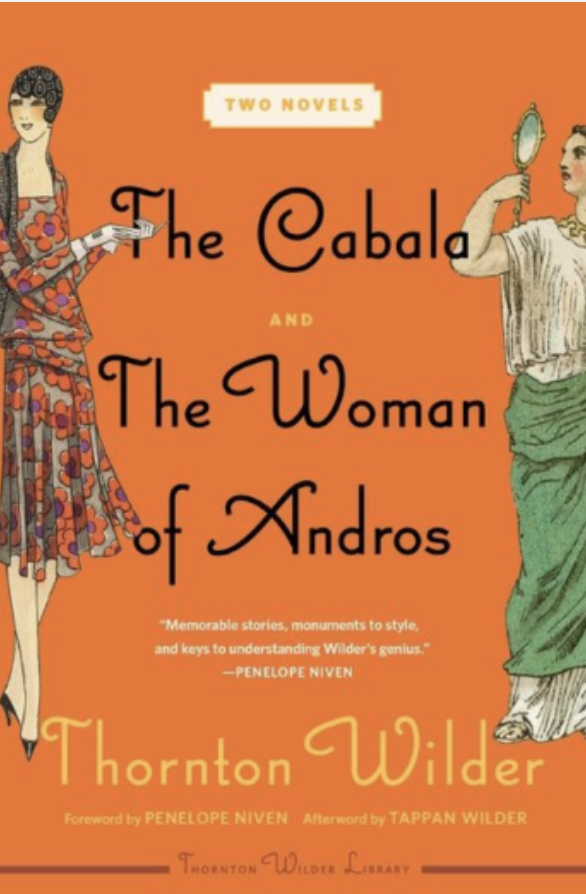
This year, on April 21, we celebrate the centennial of the publication of Wilder’s first novel, The Cabala.
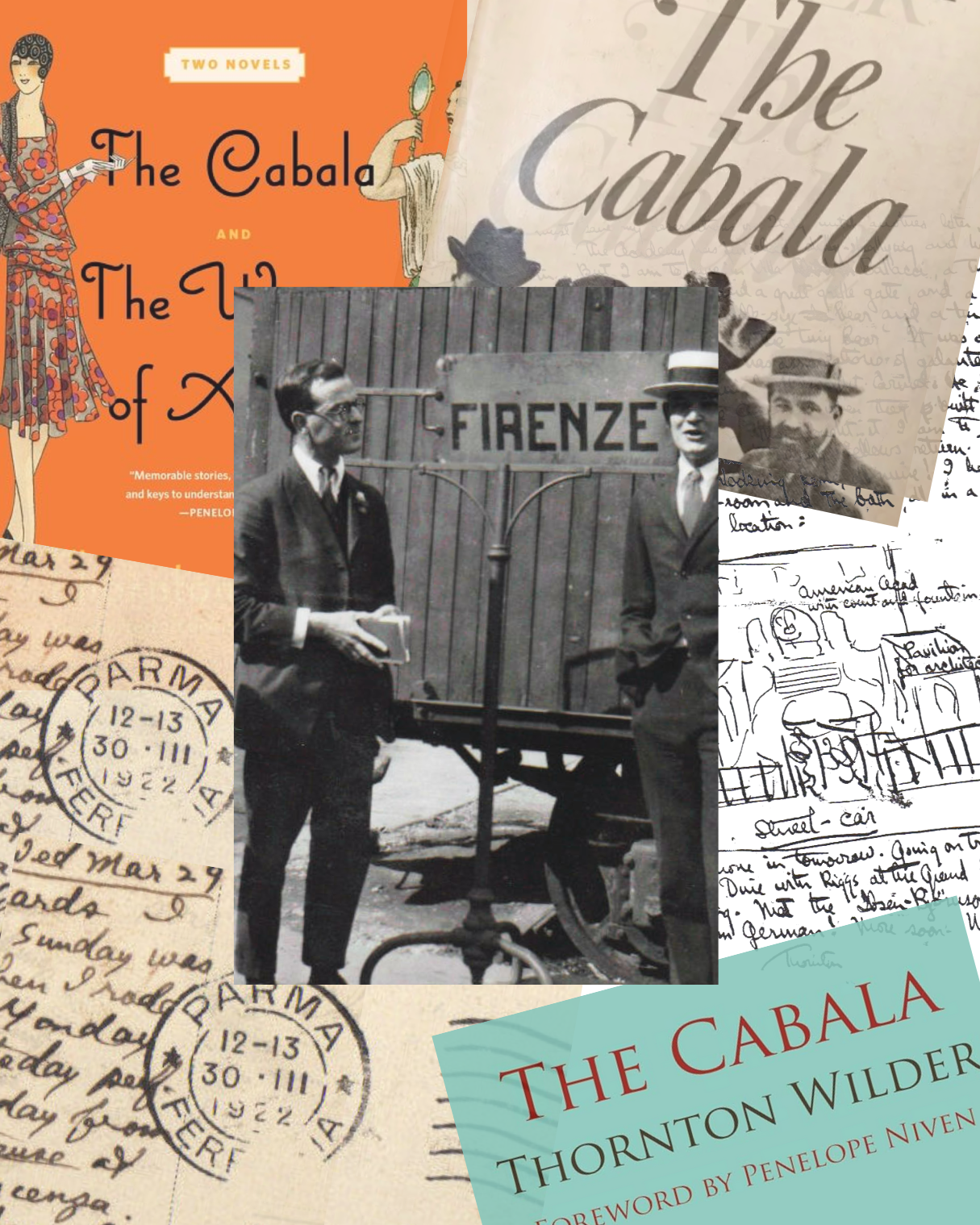
In 1926, New York publisher Albert and Charles Boni took a chance on an aspiring author named Thornton Wilder with a first edition of 3,200 copies. In its first year, The Cabala sold 5,357 copies, more than what Boni needed to break even, and sailed into its second with new printings planned. Its success assured the publication of Wilder’s next book eighteen months later, the Pulitzer-Prize-winning The Bridge of San Luis Rey. So, there we have it: a marvelous first book that opened both the door to the second and to Thornton Wilder’s five-decade run as an author. Yes, The Cabala is a story.
Inspired by the eight months he spent at the American Academy in Rome in 1920-1921, The Cabala was always one of Wilder’s favorites. In it a young American, whose real name is never revealed, visits post-WWI Rome. He is adopted by a small group of women, among them a French royal, an Italian aristocrat, an American heiress, a German banker, and one man, a Cardinal of the Roman Catholic Church. Through this exotic group, we witness obsession, depression, depravity and decadence. The Roman world they inhabit offers Wilder a golden opportunity to display his skills with a pen. Boni described his “biting irony and exquisite phrasing.” To this list we can add satire, wit, aphorism, epigram, and, above all, the use of classical mythology. As bookends to the story, no less than the towering Latin poet Virgil greets our American when he arrives in Rome, then sends him home at the end to “the new world and the last and greatest of all cities.”
Today, Wilder’s first novel is available in paperback, ebook and audio formats.